


The European Commission has adopted the RESourceEU Action Plan to accelerate and amplify its efforts to secure the EU's supply of critical raw materials, such as rare earth elements, cobalt or lithium. Building on the Critical Raw Materials Act (CRMA), the initiative provides financing and concrete tools to protect industry from geopolitical and price shocks, promote projects on critical raw materials in Europe and beyond, and partner with like-minded countries to diversify supply chains. The plan aims to fast-track relevant projects and reduce strategic dependencies.
The European Court of Auditors has recently published a special report on the EU’s municipal waste management and the progress of Member States towards the waste management targets set in relevant EU legislation.
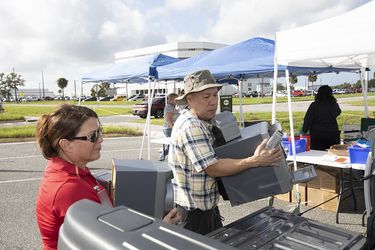
In its proposal for the 2028–2034 EU budget (Multiannual Financial Framework), the European Commission is proposing a new own resource based on non-collected e-waste through the application of a uniform rate to the weight of non-collected e-waste.

The European Commission launched a call for evidence and a public consultation on the new Circular Economy Act, currently under preparation.
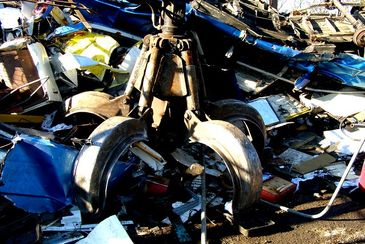
Circular automotive not realistic with loopholes and low ambition, warns EuRIC after ENVI-IMCO votes
The joint ENVI/IMCO vote on the End-of-Life Vehicles Regulation (ELVR) is a welcome step towards a more circular automotive industry in Europe. However, while progress has been made, EuRIC warns that low targets, loopholes, and legal uncertainties risk holding back the investments and market confidence needed to scale Europe’s circular economy in practice.

Europe’s plastics recycling and post-consumer textile collection, preparing for reuse, and recycling industries are facing a deepening crisis that requires urgent political action.

Circularity is no longer a niche environmental ambition - it is fast becoming a defining pillar of Europe’s industrial strategy. Amid mounting geopolitical pressures, volatile supply chains, and climate emergencies, the ability to retain materials, reduce resource dependence, and lower emissions has moved to the core of EU policymaking. This shift is visible across several flagship initiatives: from the Green Deal to the Clean Industrial Deal and, most recently, the Commission’s Steel and Metals Action Plan.

EU Metals Plan must look at energy prices and demand for recycled metals, not at export restrictions
The European Commission’s Steel and Metals Action Plan is a gamble with Europe’s recycling future, according to the European Recycling Industries’ Confederation (EuRIC). Instead of first securing demand for recycled metals, it prioritises keeping "scrap" in Europe, for Europe, by restricting exports, ignoring the fundamental problem: part of Europe’s recycled metals (“scrap”) is exported because of weak domestic demand and limited processing capacity.